Reviewed by Mike Redondo, Founding Attorney, Redondo Law, P.A. • Updated October 2026
Redondo Law helps people who were hurt by semi-trucks, 18-wheelers, delivery trucks and other commercial vehicles. If you were injured or lost a loved one in a crash anywhere in Miami or the rest of Miami-Dade County, a Miami truck accident lawyer can help you deal with the trucking company and its insurers while you focus on getting better.
The consultation is free, and you pay no fee unless we win. Our phones are answered 24/7, and our staff is fully bilingual (Se habla español). You can meet us at our office at 2828 Coral Way, by phone or by video. If you cannot travel, we come to you.
Free, confidential case review
Tell us what happened. Mike Redondo personally reviews every request, and we answer 24/7. Se habla español.
Why truck accident cases are different
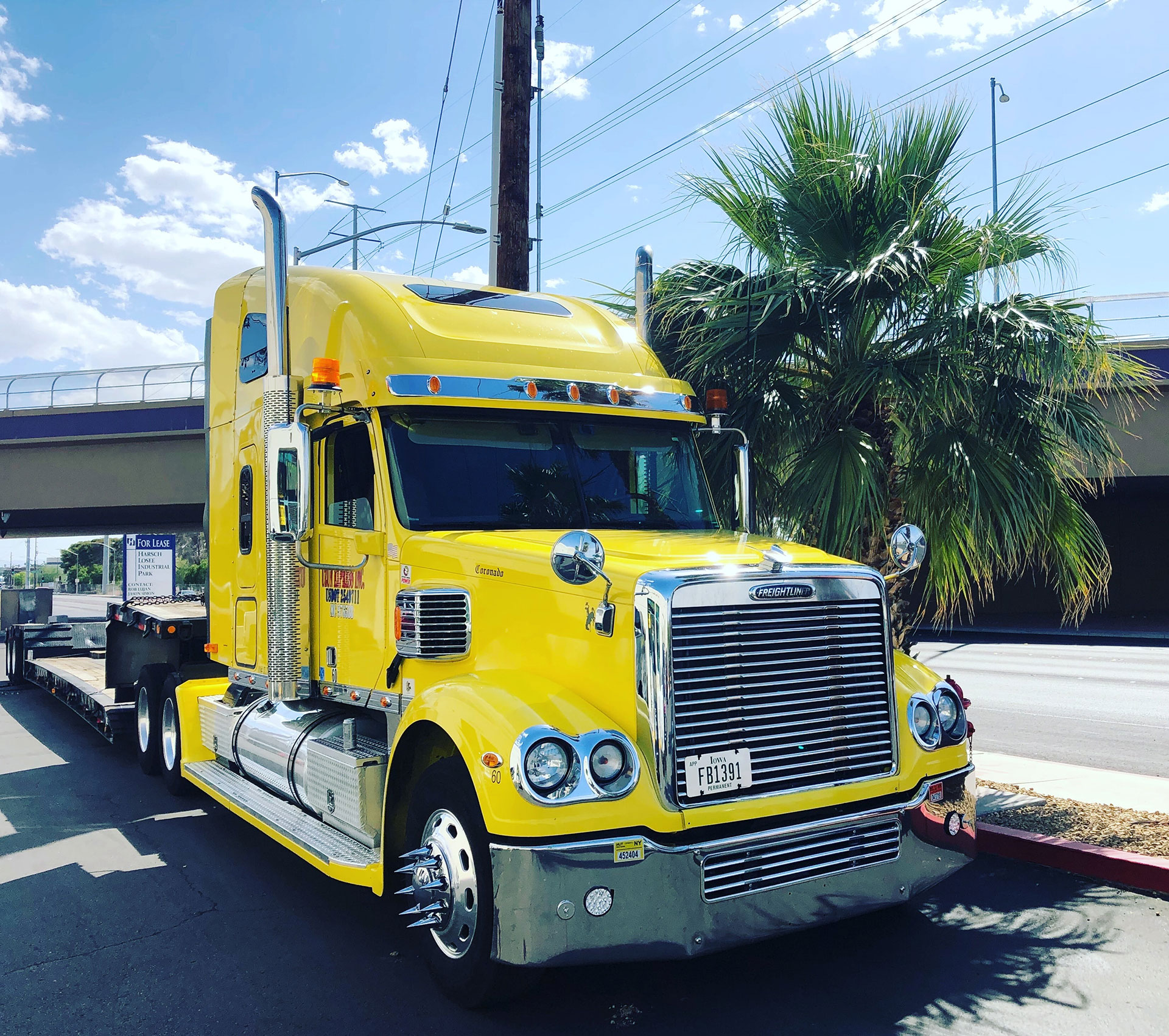
A truck crash is not just a bigger car crash. A loaded tractor-trailer can weigh many times more than a passenger car. That weight means more force, more damage and more serious injuries. It also means the case is built differently.
- Federal rules apply. Most commercial trucks must follow Federal Motor Carrier Safety Administration (FMCSA) rules on driving hours, driver hiring, drug testing and maintenance. A broken rule can be strong evidence of fault.
- The defendant is usually a company. You are often up against a motor carrier, its insurer and its lawyers. Many trucking companies send their own investigators to the scene within hours.
- There is usually more insurance. Most Florida drivers are not required to carry bodily injury coverage. Interstate trucking companies must carry much higher limits under federal law.
- The evidence is in the company’s hands. Logs, engine data, dash camera video and driver files belong to the carrier. Some of it can be lawfully discarded after a few months.
Federal insurance minimums for trucks
Under 49 CFR 387.9, interstate for-hire motor carriers must carry at least $750,000 in liability coverage for general freight, $1,000,000 for oil, and $5,000,000 for most hazardous materials. These are federal minimums for interstate carriers only. A local truck that never crosses state lines may carry different coverage, and some carriers carry more. Part of our job is finding every policy that may apply.
Who can be liable for a truck accident
In a car crash there is usually one driver and one insurer. In a truck crash, several companies may share the blame. Who is liable depends on the facts, the contracts and the evidence. Parties we look at include:
- The truck driver, for speeding, distraction, fatigue, impairment or unsafe lane changes.
- The motor carrier, for the driver’s conduct on the job and for its own choices, such as hiring an unqualified driver or pushing unrealistic schedules.
- The truck or trailer owner or lessor, when the equipment is owned by someone other than the carrier.
- The shipper or loader, if cargo was overloaded, unbalanced or poorly secured.
- The maintenance company, if bad repairs or skipped service caused brake, tire or lighting failures.
- The freight broker, in some cases, if it chose a carrier it knew or should have known was unsafe.
A defective part can also play a role. If a brake, tire or steering system failed because of how it was made, a product liability claim may be part of the case.
FMCSA rules that matter in a truck accident claim
Federal safety rules give us a checklist to measure the driver and the carrier against. These are the ones that come up most often.
Hours of service
Federal rules limit truck drivers to 11 hours of driving within a 14-hour window, after 10 hours off duty. Tired drivers react slower and drift out of lanes. We compare the driver’s logs to fuel receipts, toll records, delivery times and phone data to see if the limits were broken.
Electronic logging devices
Most interstate trucks must use an electronic logging device (ELD) that records driving time. Many trucks also have engine control modules and telematics systems that record speed, braking and location in the moments before a crash. This data can show what really happened.
Drug and alcohol testing
Commercial drivers are subject to drug and alcohol testing, including before hiring, at random and after certain crashes. We ask for the test results and for proof that the carrier ran the program the way the rules require.
Driver qualification files
Carriers must keep a qualification file for each driver. It includes the driver’s application, driving record, license history and medical certificate. A missing or thin file can show the company put an unsafe driver on the road.
Inspection and maintenance records
Carriers must inspect, repair and maintain their trucks and keep records of that work. Drivers must also inspect their rigs. Worn brakes, bald tires and broken lights often show up in these records before a crash.
Why preservation letters must go out fast
Carriers only have to keep hours-of-service records for 6 months. Video can be recorded over even sooner. That is why we send preservation letters to the trucking company right away, demanding that it keep the logs, engine data, dash camera video, driver files and maintenance records. Waiting can mean losing the proof.
Semi-truck, 18-wheeler and commercial truck accidents
We handle claims involving all kinds of commercial trucks. Each type brings its own risks and its own set of possible defendants.
Semi-truck and 18-wheeler crashes
Tractor-trailers need a long distance to stop and have large blind spots on every side. Common crashes include rear-end collisions, jackknifes, underride crashes, wide-turn crashes and sideswipes during lane changes on the expressways.
Box trucks and delivery vans
Delivery trucks stop often, double-park and rush to meet route times. The driver may be an employee, a contractor or work for a delivery service partner. See our page on delivery driver accidents for more on how these claims work.
Dump trucks and cement mixers
Construction trucks are heavy, can tip when loaded and often driven on local streets near job sites. Unsecured loads, rollovers and backing crashes are common problems.
Garbage trucks
Garbage trucks make constant stops and back up in neighborhoods and alleys. Some are run by private haulers and some by a city or the county. A claim against a government agency requires written notice first and has damage caps under Florida law, so the rules change depending on who owns the truck.
Tow trucks
Tow trucks often move fast to reach a scene and then pull a heavy load. A poorly secured vehicle or a tired operator can cause a second crash.
Where truck crashes happen across Miami-Dade
Miami is a freight city. Trucks move cargo between PortMiami, Miami International Airport and the warehouse districts in Doral, Medley and Hialeah Gardens, and long-haul rigs come and go on the Turnpike and I-75. That traffic shares the road with commuters every day, often in afternoon rainstorms.
North Miami, North Miami Beach and Miami Gardens
I-95 carries trucks through North Miami and North Miami Beach. The Golden Glades Interchange, where I-95, the Palmetto, the Turnpike and US-441 meet, forces heavy trucks and cars to merge in a short space. In Miami Gardens, trucks use the Turnpike and US-441 (State Road 7). Local deliveries keep trucks busy on Biscayne Boulevard and on NE 163rd Street and NE 167th Street in North Miami Beach.
Miami Beach deliveries
On Miami Beach, box trucks and delivery vans serve hotels, restaurants and shops along Collins Avenue and Alton Road. Double-parking, sudden stops and tight turns put pedestrians, cyclists and drivers at risk. See our Miami Beach injury page.
The airport and Doral freight corridors
The Palmetto Expressway (SR 826) carries heavy truck traffic past the airport cargo area and Doral warehouses, with frequent merges and lane changes. The Dolphin Expressway (SR 836), NW 25th Street and NW 36th Street link the airport to Doral and the western warehouse districts. Learn more on our Doral injury page.
Hialeah, Medley and Okeechobee Road
Okeechobee Road (US-27) carries trucks through Hialeah and Medley and toward the farm areas to the northwest. Quarry and construction trucks are a regular sight. See our Hialeah injury page.
PortMiami and downtown
Trucks reach PortMiami from I-95 and I-395 through the port tunnel, carrying containers to and from the port. Those rigs then mix with downtown traffic and the MacArthur Causeway.
Who investigates a Miami truck crash
The Florida Highway Patrol usually handles crashes on the expressways, the Turnpike and I-95. City police, such as Miami, Miami Beach, North Miami, North Miami Beach, Miami Gardens, Doral or Hialeah, handle crashes on local streets. The Miami-Dade Sheriff’s Office covers unincorporated areas. We get the crash report, but we do not wait for it to start our own investigation.
Truck accident injuries
Because of the size difference, people in cars, on motorcycles and on foot often suffer life-changing harm. Common injuries include traumatic brain injuries, spinal cord injuries, broken bones, internal injuries, burns and amputations. These injuries can require years of care and keep you from working.
A claim can include medical bills, future care, lost wages, lost earning ability, and pain and suffering. When a crash takes a life, the family may have a wrongful death claim. Learn more on our catastrophic injury page.
What a truck accident lawsuit in Miami looks like
Many truck accident claims settle without a trial, but you should know the path. Here is how a lawsuit usually moves when you hire a Miami truck accident lawyer, in plain terms.
- Investigation. We send preservation letters, get the crash report, photos and video, talk to witnesses, and pull the carrier’s federal safety record. When needed, we work with accident reconstruction engineers.
- Claim. We identify every liable party and every policy, gather your medical records and bills, and present a claim to the insurers.
- Filing suit. If the insurers do not make a fair offer, we file a lawsuit, usually in Miami-Dade circuit court, before the deadline runs.
- Discovery. Both sides exchange documents and take sworn testimony (depositions). This is where we get the logs, engine data, driver files and maintenance records, and question the driver and company managers.
- Mediation. Most Florida courts require mediation. A neutral mediator meets with both sides to try to reach a settlement. Many cases resolve here.
- Trial. If the case does not settle, a jury hears the evidence and decides fault and damages.
You make the key decisions, including whether to accept any offer. We explain each step as it comes.
What to do after a truck accident in Miami
- Call 911 and get medical care. Some serious injuries do not show symptoms right away.
- Get initial medical treatment within 14 days, or you can lose your PIP benefits.
- If you can, take photos of the truck, its DOT number, the company name on the door, the trailer, the scene and your injuries.
- Get the names and phone numbers of witnesses.
- Do not give a recorded statement to the trucking company’s insurer. You have no duty to do so.
- Do not sign anything or accept a quick check from the trucking company.
- Keep your medical records, bills and proof of missed work.
- Call a truck accident attorney quickly so preservation letters go out before evidence is lost.
Florida law that applies to truck accident claims
Comparative fault. Florida uses modified comparative negligence. If you are found more than 50% at fault, you generally recover nothing. At 50% or less, your recovery is reduced by your share. For example, in a hypothetical case where a jury finds you 20% at fault, your damages would be reduced by 20%. Trucking companies often try to shift blame to the other driver, so the evidence matters.
PIP comes first. Your own personal injury protection (PIP) coverage pays up to $10,000: 80% of medical bills and 60% of lost wages, no matter who caused the crash. To seek pain-and-suffering damages from the at-fault party, you generally must have a permanent injury, significant scarring or a similar serious injury. Many truck crash injuries meet this test, but each case is different. If you were a passenger or pedestrian, see how PIP works on our car accident page.
Deadlines
Most negligence claims from crashes on or after March 24, 2023 must be filed within 2 years. A wrongful death claim must be filed within 2 years of the death. Claims against a government agency, such as a city garbage truck, require written notice first. Evidence can disappear much sooner than that, so do not wait.
Why choose Redondo Law as your truck accident attorney
When you hire a Miami truck accident lawyer, you should know who is working on your case. Mike Redondo personally oversees every case. Before founding Redondo Law in 2019, he spent six years at Holland & Knight defending major corporations in catastrophic injury and wrongful death cases. He knows how corporate defendants and their lawyers build a defense, and he uses that knowledge for injured people. Read more about Mike Redondo.
Our staff is fully bilingual, so you can talk about your case in English or Spanish. Phones are answered 24/7, which matters when evidence is time-sensitive. We serve clients across Miami-Dade, from Miami Gardens and North Miami Beach to Doral, Hialeah and Miami Beach. You can see our case results.
Frequently asked questions
What evidence matters most in a truck accident case?
The most important evidence often belongs to the trucking company: the driver’s electronic logs, engine and telematics data, dash camera video, the driver qualification file, drug and alcohol test results, and inspection and maintenance records. Photos of the scene, witness names, traffic and business camera footage, and your medical records matter too. Because carriers only have to keep some records for a short time, we send preservation letters right away.
How long do I have to file a truck accident lawsuit in Florida?
For most crashes on or after March 24, 2023, you have 2 years to file. For wrongful death, it is 2 years from the date of death. If a government vehicle was involved, written notice is required first. But do not wait for the deadline. Trucking companies only have to keep hours-of-service records for 6 months, and video can be lost even sooner.
Who pays if I am hit by a semi-truck?
Your own PIP pays first, up to $10,000 for medical bills and lost wages. Beyond that, the claim is usually against the driver and the trucking company and their insurers. Other companies, such as the truck owner, the loader or a maintenance shop, may also be liable depending on the facts. Interstate for-hire carriers must carry at least $750,000 in coverage under federal law.
Is a truck accident lawsuit worth more than a car accident case?
Every case is different, and no lawyer can promise a result. Truck cases often involve more serious injuries and more insurance coverage than car crashes, but they are also harder to prove. They take more investigation, more records and more time. What your case may be worth depends on your injuries, the evidence and the coverage available.
What if the truck driver says the crash was my fault?
That is common. Florida’s comparative fault rule means you can still recover if you were 50% or less at fault, though your recovery is reduced by your share. Driver logs, engine data, video and witness statements often tell a different story than the driver. That is why preserving evidence early is so important.
Do I need a truck accident lawyer near me?
You need a lawyer who knows Miami-Dade roads, courts and police agencies. Our office is at 2828 Coral Way in Miami, and we serve clients across the county. You can meet in person, by phone or by video, and if you cannot travel, we come to you. Our bilingual staff answers the phone 24/7.
If you or a loved one was hurt in a truck crash anywhere in Miami-Dade, call (305) 908-6778 or contact us online for a free consultation with a Miami truck accident attorney.
Related articles
- Understanding Liability After a Florida Truck Accident
- Miami Truck Accidents Are on the Rise
- How Are Commercial Truck Accidents Different Than Other Accidents?
Hit by a Truck in Miami-Dade? Talk to a Lawyer Today
Free, confidential case review. No fee unless we win. Available 24/7. Se habla español.