
By Mike Redondo, Founding Attorney, Redondo Law, P.A. • November 2026
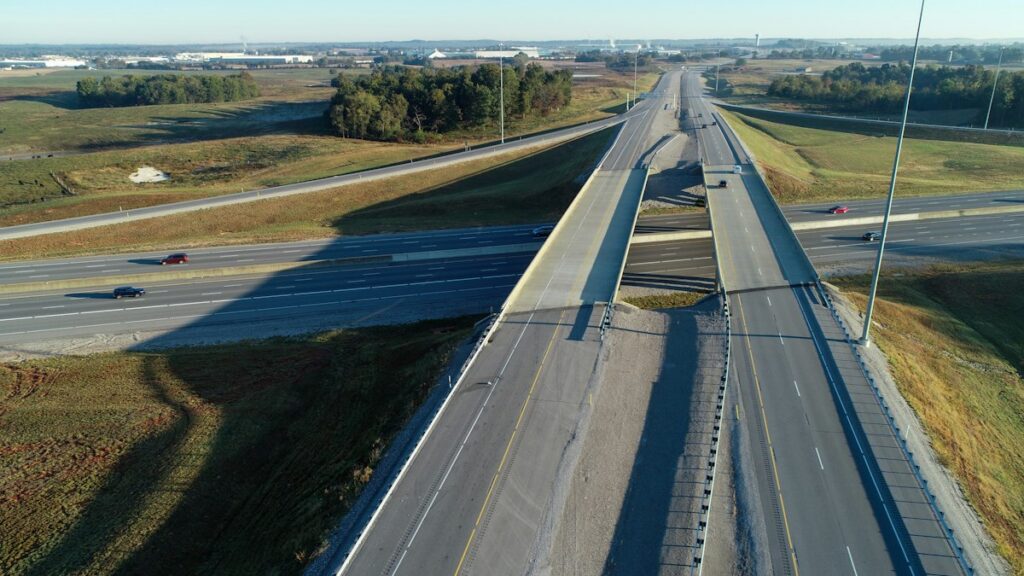
In most I-95 express lane crashes, the driver who made the unsafe move is at fault. Often that is the driver who cut across the plastic poles. But Florida law lets fault be shared, so the answer in your case depends on the evidence.
If you were in an I-95 express lane accident in Miami, here is how fault is usually sorted out and what proof matters.
Why the express lanes see these crashes
The express lanes on I-95 run between downtown Miami and the Golden Glades and continue north into Broward County. Only a row of flexible plastic poles separates them from the regular lanes. There is no concrete wall.
That design creates two problems. First, the lanes on each side of the poles often move at very different speeds. The regular lanes may be crawling while the express lanes are flowing, or the other way around. Second, the poles bend. A driver who wants in or out can simply drive over them.
Drivers who cut across the poles
You are supposed to enter and leave the express lanes only at the marked entry and exit points. Some drivers do not wait. They see open road on the other side and dive across the poles. Others realize they are about to miss an exit and cut back out.
A driver who crosses the poles enters a lane where no one expects a car to appear. The driver already in that lane may have less than a second to react. When that move causes a crash, the driver who crossed usually carries most or all of the fault. Crossing the poles is also a traffic violation, and a citation can be useful evidence of what happened.
Sudden speed differences and rear-end crashes
Not every express lane crash involves the poles. Traffic inside the lanes can stop without warning, and drivers going fast behind may not stop in time. In a rear-end crash, the rear driver is usually presumed to be at fault. That presumption can be challenged with evidence, for example proof that the front car cut in and braked hard.
Chain-reaction crashes are common too. With three or more cars, several drivers may each share part of the blame.
How Florida splits fault
The Florida rule
Florida uses modified comparative negligence. If you are found more than 50% at fault, you generally recover nothing. If you are 50% or less at fault, your recovery is reduced by your percentage of fault.
Here is a simple hypothetical. A driver cuts across the poles into your lane and you hit him. The insurer argues you were speeding. If a jury found the other driver 80% at fault and you 20%, your recovery would be reduced by 20%. If a jury somehow found you 51% at fault, you would recover nothing.
Evidence that proves what happened
Express lane crashes happen fast, and the drivers often tell opposite stories. Good evidence settles the argument.
- Dashcam video. Your own, or video from a witness, a truck or a bus nearby. This is often the clearest proof that someone crossed the poles.
- Witnesses. Other drivers who saw the move. Get names and numbers at the scene, because they will not wait.
- Toll records. SunPass and toll records can help show whether and when a vehicle entered the express lanes through a proper entry point.
- The crash report. The Florida Highway Patrol report lists citations, statements and a diagram.
- Vehicle damage and the poles. Photos of the impact points and of flattened or missing poles can show the angle of the crash.
- Traffic cameras. Some footage is kept only a short time, so requests need to go out quickly.
- Get to a safe spot and call 911.
- Photograph the cars, the poles and the lane you were in.
- Save your dashcam video right away.
- Ask witnesses for their contact details.
- See a doctor within 14 days so your PIP benefits are protected.
- Do not give a recorded statement to the other driver’s insurer.
When the road itself is part of the problem
Sometimes the question is not only who drove badly. Missing poles, confusing signs or a poorly planned entry point may play a part. A claim based on road design or maintenance is a claim against a government agency, and those claims have special rules.
Under Florida law, you must give the agency written notice before you can sue, and there are caps on the damages you can recover. Governments also have broad protection for planning-level design decisions, so these claims need to be looked at early.
For most claims, you have two years from the crash to file a lawsuit. Evidence like video can be gone long before that.
If you were hurt in the express lanes, we can review the facts and tell you where you stand. Visit our Miami car accident page or call (305) 908-6778 for a free consultation.
Questions About Your Case?
Free, confidential case review. No fee unless we win. Available 24/7. Se habla español.