Reviewed by Mike Redondo, Founding Attorney, Redondo Law, P.A. • Updated November 2026
Redondo Law helps people hurt in Key Largo, Tavernier, Islamorada and the rest of the Upper Keys. We handle car and truck crashes on US-1, rental car and moped wrecks, boat and jet ski accidents, dive and snorkel charter injuries, falls at hotels and restaurants, and wrongful death. We help locals, workers who commute down from the mainland, and visitors who came for a weekend and went home hurt.
We take cases throughout Florida, including the Keys, and we can meet by phone or video. If your injuries keep you from traveling, we come to you. The consultation is free, and there is no fee unless we win. We answer the phone 24/7, and our staff is fully bilingual in English and Spanish.
Free, confidential case review
Tell us what happened. Mike Redondo and his team review every request, and we answer 24/7. Se habla español.
Roads and places in the Upper Keys
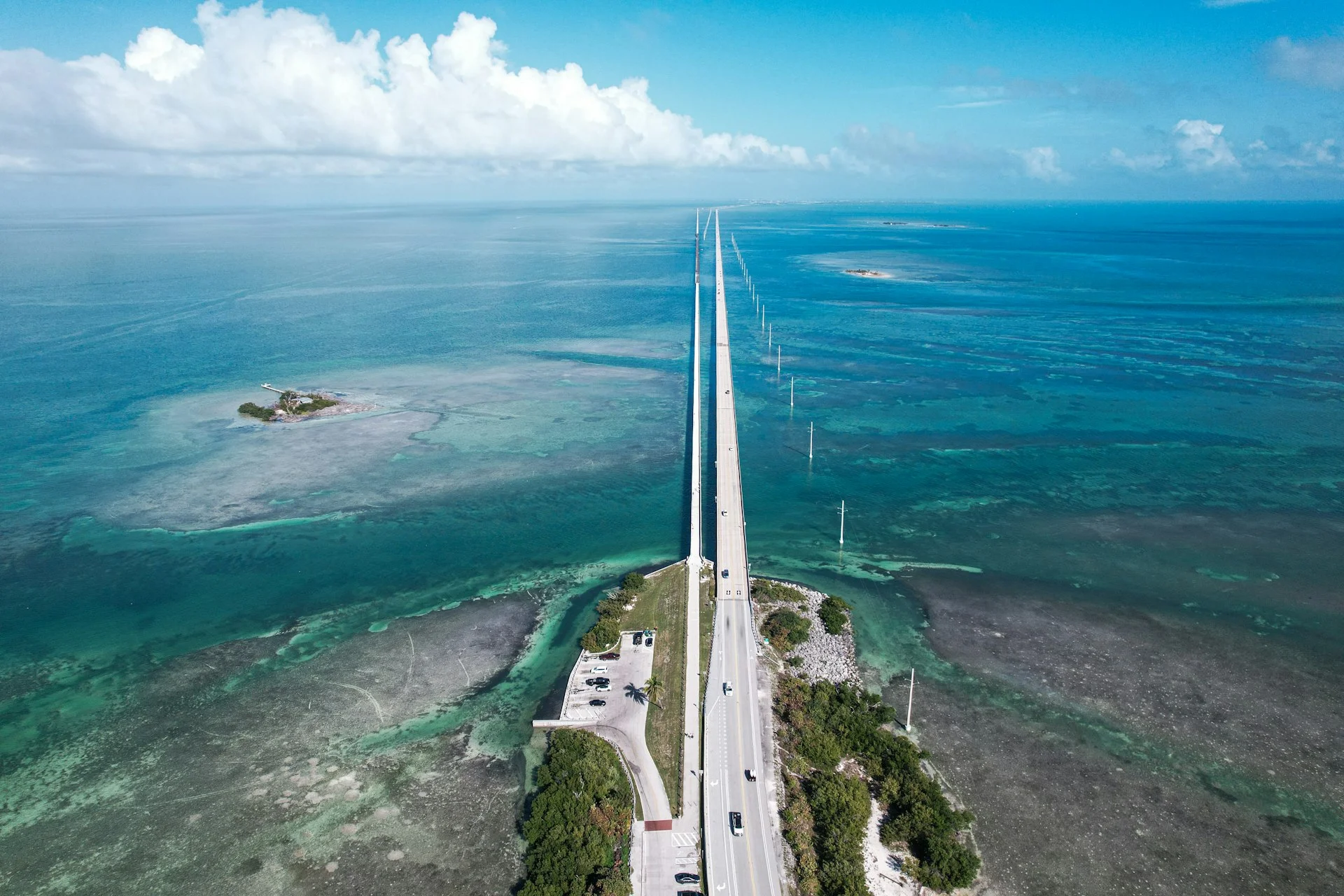
Almost everyone reaches the Upper Keys on US-1, also called the Overseas Highway. Locations are given by mile marker (MM). The markers count down from the mainland toward Key West, where MM 0 sits. Coming south from Florida City, drivers take the 18-Mile Stretch to Key Largo. This part of US-1 is mostly one lane each way with a concrete barrier down the middle. It crosses a high bridge just before reaching Key Largo. The other way in is Card Sound Road, a toll route over the Card Sound Bridge into North Key Largo. Our Homestead personal injury lawyer page covers the mainland side of these roads.
Key Largo is home to John Pennekamp Coral Reef State Park at MM 102.5, known as the first undersea park in the country. It draws snorkelers, divers and boat tours. Tavernier sits just south of Key Largo. Islamorada runs from about MM 91 down to about MM 72.7 and includes Plantation Key, Windley Key, Upper Matecumbe Key and Lower Matecumbe Key. The Florida Keys Overseas Heritage Trail, a paved path for walkers and cyclists, runs next to US-1. Its longest unbroken paved section goes from MM 106 in Key Largo to MM 72 in Islamorada.
Who handles crashes in the Upper Keys
Key Largo and Tavernier are not cities, so the Monroe County Sheriff’s Office covers them. Islamorada is a village, but it does not have its own police department. It contracts with the Monroe County Sheriff’s Office for police services. The Florida Highway Patrol also works crashes on US-1. On the water, the Florida Fish and Wildlife Conservation Commission (FWC), the Sheriff’s Office and the U.S. Coast Guard may respond. Our guide to getting a Florida Highway Patrol crash report explains the steps.
Hospitals and trauma care
The main hospital in the Upper Keys is Baptist Health Mariners Hospital at 91500 Overseas Highway in Tavernier. Its emergency room is open 24 hours a day. It has a helipad and a hyperbaric chamber for diving injuries. There is no trauma center anywhere in the Keys. When someone is badly hurt, Monroe County’s Trauma Star helicopter, run by county fire rescue and the Sheriff’s Office, often flies the patient to a trauma center on the mainland, such as Jackson Memorial’s Ryder Trauma Center or HCA Florida Kendall Hospital in Miami-Dade. This matters for your claim. Your medical records may be spread across two or three hospitals, and air transport bills can be large.
Car crashes on US-1
US-1 is the only road through most of the Keys. Long parts of it have one lane each way. Traffic backs up behind slow drivers, and some people pass when they should not. That leads to head-on crashes, which are often the worst kind. Other common crashes include rear-end wrecks in stop-and-go traffic in Key Largo, crashes at turn lanes into shops and marinas, and drivers who drift while looking at the water. Many drivers are tourists who do not know the road. Some are tired after a long drive. Some have been drinking.
Florida is a no-fault state. Your own Personal Injury Protection (PIP) coverage pays first, no matter who caused the crash. PIP pays up to $10,000. It covers 80% of medical bills and 60% of lost wages. You must get care within 14 days, and you may be limited to $2,500 unless a doctor finds an emergency medical condition. PIP is still the law in Florida in 2026. For serious injuries, you can also make a claim against the at-fault driver. Many Florida drivers carry little or no bodily injury coverage. That is why uninsured motorist coverage matters so much. Our Miami car accident lawyer page has more.
Rental cars, mopeds and tourist injuries
Many visitors drive down in a rental car or rent a moped or bike once they arrive. If you were hurt in a rental, questions about coverage get tricky fast. The rental company, your own auto policy, a credit card benefit and the other driver’s insurer may all play a part. Our page on rental car and tourist crashes walks through who pays.
Florida PIP generally does not cover people riding mopeds, scooters or motorcycles. If a car hits you while you are on one, your claim will usually be against the driver’s insurance and your own uninsured motorist coverage, if you have it. A rental company may also be at fault if it handed you a moped with bad brakes or worn tires.
Boat, jet ski, snorkel and dive charter injuries
The Upper Keys are built around the water. People get hurt on fishing charters, party boats, rented jet skis, dive boats and snorkel trips. Common causes include careless boat operators, too many people on board, drinking, wakes taken too fast, propeller strikes and dive crews that lose track of a diver. Florida law sets clear rules. Anyone born on or after January 1, 1988, needs a Boating Safety Education ID Card to run a boat with 10 horsepower or more. It is a crime to operate a boat with a blood alcohol level of 0.08 or higher.
An operator must report a boating accident by the quickest means possible if someone is hurt beyond first aid, someone dies or disappears, or damage reaches $2,000 or more. The report goes to FWC, the county sheriff or the local police. Federal maritime law may apply to injuries on the water, and it can change deadlines and the rules of the case. Charter companies sometimes ask you to sign a waiver. A waiver does not always end your claim. See our Miami boat accident lawyer page to learn more.
Pedestrians and cyclists
People walk and ride along US-1 to reach shops, bars and boat ramps. The Overseas Heritage Trail runs next to the highway, but riders still have to cross busy driveways and side streets. If a driver hit you while you were walking or riding a bike, PIP may help pay your bills first. If the driver fled, uninsured motorist coverage may help.
Hotel, resort, pool and bar injuries
Resorts, rental homes, marinas and waterfront bars draw big crowds. Falls happen on wet pool decks, slick docks, broken stairs and dark walkways. In Florida, if you fall because of a hazard in a business, you must show the business knew about it or should have known about it. Photos, witness names and an incident report help prove that. Our Miami slip and fall lawyer page has more detail.
Some injuries come from people, not floors. If you were attacked at a hotel, bar or rental property, the owner may be responsible for negligent security.
Visitors who already went home
Many people hurt in the Upper Keys live in another state or country. You do not need to stay in Florida to bring a claim. Your case is usually filed in Florida, where the injury happened. We work with clients by phone, video and email, and we can get your records from Mariners Hospital or a mainland trauma center for you.
What to do after an injury in Key Largo or Islamorada
- Call 911. Ask for police and medical help. Give the closest mile marker so help can find you.
- Get medical care the same day if you can. For car crashes, Florida PIP requires treatment within 14 days.
- Take photos of the scene, the vehicles or boat, your injuries and any hazard that caused your fall.
- Get names and phone numbers of witnesses, and ask the officer for the report number and agency name.
- Look for cameras at nearby shops, hotels, marinas and gas stations. Footage is often erased within days.
- Report the injury to the hotel, bar, rental company or charter operator, and ask for a copy of the report.
- Do not give a recorded statement to the other side’s insurance company.
- Call a lawyer before you sign anything or accept a check.
Florida law you should know
Deadline to sue: For most injury claims from accidents after March 24, 2023, you have 2 years to file a lawsuit. Wrongful death claims also have a 2-year deadline. Claims against the government: If a city, the county or a state agency caused your injury, you must give written notice before you sue, and the law caps how much you can collect (currently $200,000 per person and $300,000 per incident). Shared fault: Florida uses modified comparative negligence. If you are more than 50% at fault, you cannot recover. If you are 50% or less at fault, your award goes down by your share. For example, if your damages are $100,000 and you are found 20% at fault, you could recover $80,000.
Working with Redondo Law
We work out of Miami and take cases throughout Florida. A lawsuit is filed where the case belongs. For an injury in Key Largo, Tavernier or Islamorada, that is usually Monroe County, which is part of the Sixteenth Judicial Circuit. Some cases, like many cruise or maritime claims, may belong in federal court.
Mike Redondo is licensed throughout Florida. Before founding Redondo Law in 2019, he spent six years at Holland & Knight defending major corporations in catastrophic injury and wrongful death cases. Mike and his team give every case personal attention. Our team keeps you updated, answers your questions and handles the paperwork so you can focus on getting better. If you lost a family member, our wrongful death page explains who can bring a claim.
Frequently asked questions
Do I have to come to your office?
No. We take cases throughout Florida, including the Upper Keys. We can meet by phone or video, and if your injuries keep you from traveling, we come to you.
I was flown from the Keys to a Miami hospital. Does that affect my case?
It can. Your records may be at Mariners Hospital and at a mainland trauma center, and air ambulance bills can be large. We gather all of them so the full cost of your injury is counted.
I got hurt on a dive or snorkel charter and signed a waiver. Can I still make a claim?
Maybe. A waiver does not always protect a company, especially when the crew was careless. Federal maritime law may also apply. Keep the waiver and any booking emails, and call us so we can review them.
I was visiting from out of state. Can I handle my claim from home?
Yes. Most of our work with out-of-town clients happens by phone, video and email. Your case is usually filed in Florida, and you may not need to come back often, if at all, before trial.
How much does it cost to hire you?
The consultation is free, and there is no fee unless we win.
If you or someone you love was hurt in Key Largo, Tavernier, Islamorada or anywhere in the Upper Keys, call us at (305) 908-6778. We answer 24/7, in English and Spanish. The consultation is free, and there is no fee unless we win.
Hurt in the Florida Keys? Talk to a Lawyer Today
Free, confidential case review. No fee unless we win. Available 24/7. Se habla español.